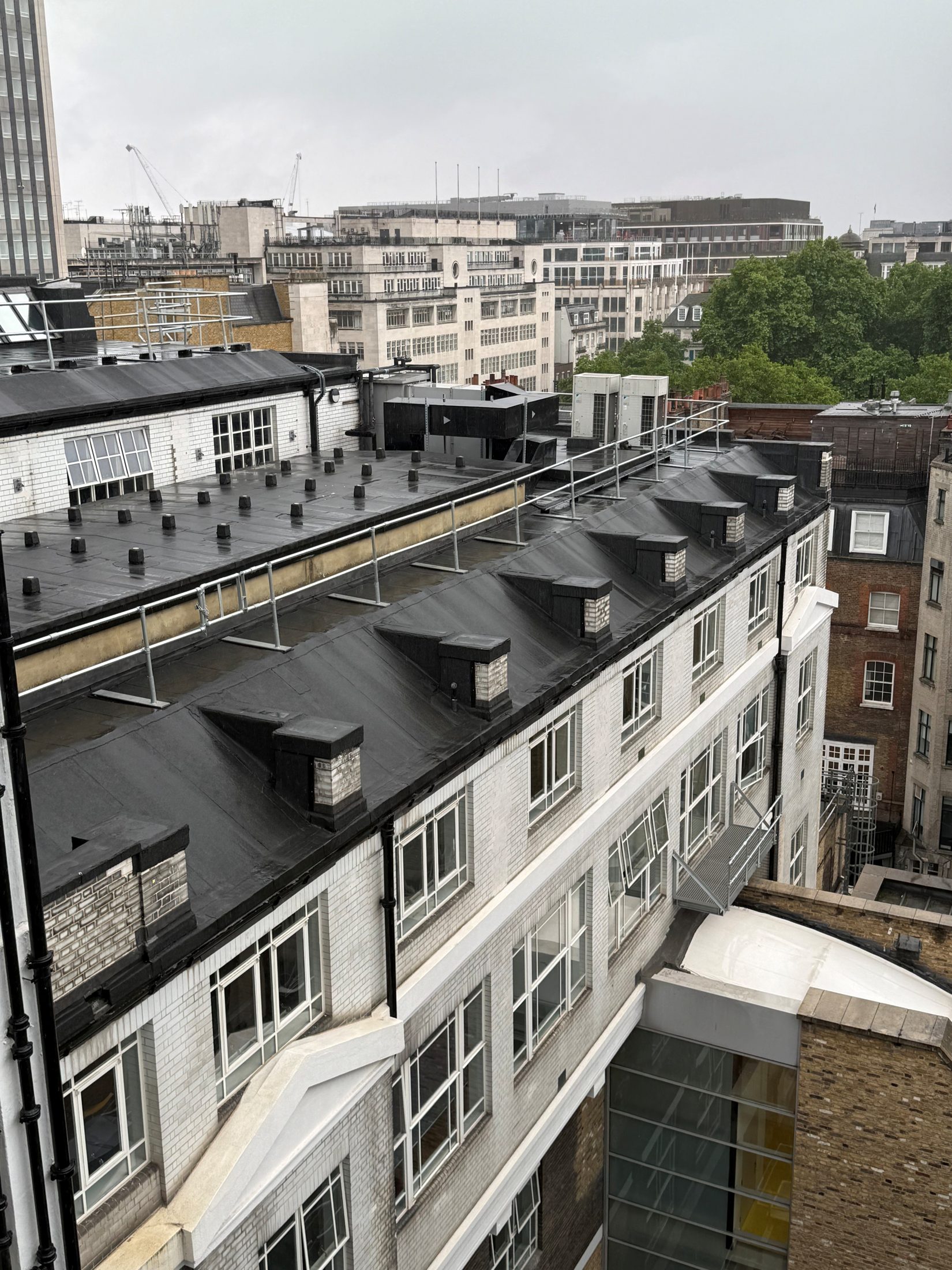
It depends on the system. As a guide, built-up felt systems typically last 20–30 years, single-ply membranes (PVC, TPO, EPDM) 20–30+ years, and liquid-applied systems 15–25 years, assuming they are installed by an approved contractor and maintained regularly. Manufacturer guarantees on approved installations commonly run 15–25 years.
An overlay is often possible when the existing roof deck is sound, dry and structurally able to take the extra load. A condition survey — including core samples and moisture readings — tells you whether trapped water or a failed deck means a full strip-and-replace is needed. Overlays usually cost less and cause less disruption.
Common signs are internal leaks or damp patches, standing water (ponding) that remains well after rainfall, blistering, splits or cracked membranes, failed flashings and laps, corroded fixings on metal sheet roofs, and rising energy bills from poor insulation.
In England, replacing more than 50% of a roof's covering (or 25% of the whole building envelope) is usually classed as renovation of a thermal element under Building Regulations Part L, which normally requires the insulation to be brought up to current standards where technically and economically feasible. Your contractor and building control can confirm what applies.
Don't disturb it. Asbestos cement sheet roofs are often over-clad with a new insulated composite or built-up system, which avoids removal. If removal is needed, it must be carried out by a licensed or suitably trained contractor following an asbestos survey.
Industry guidance commonly recommends at least twice a year — typically spring and autumn — and after severe storms. Planned preventative maintenance (gutter clearance, checking outlets, flashings and laps) helps prevent leaks, and regular maintenance is often a condition of keeping a manufacturer's guarantee valid.
Look for NFRC membership, health and safety schemes such as CHAS, SafeContractor or Constructionline, TrustMark for domestic work, ISO 9001/14001/45001 certification, and approval from the manufacturer whose system is being installed — which is usually required for the guarantee. Check insurance levels too.
Manufacturers such as Bauder, Langley, Sika, Kingspan and Alumasc only issue their full system guarantees when the roof is installed by a trained, approved contractor and inspected. Using an unapproved installer can leave you without a guarantee.
Usually, yes. Work can be phased in sections, scheduled around operating hours, and protected with temporary waterproofing, edge protection and segregated access so that warehouses, offices, schools and shops keep running.
Neither is better in every case. Single-ply is lightweight and quick to install — well suited to large industrial roofs. Built-up felt is very robust and tolerant of foot traffic. Liquid systems suit complex details and refurbishing over existing roofs. A survey determines the best fit for the building and budget.